• Home
  • Costs & Dangers of AI Data Centers
  • Action Items
  • Rallies & Rights
  • First They Came
Home

San Jose CAN is a new, nonpartisan grassroots chapter of Indivisible, located in San Jose, California. We are dedicated to building a stronger, safer community by bringing neighbors together to advance social justice and uphold democratic values. We host civic engagement activities to keep our community informed on important issues and to encourage meaningful civic participation. We welcome participation from people of diverse ethnicities, backgrounds, and life experiences. All attendees are expected to contribute to a space grounded in respect, open-minded dialogue, and thoughtful participation.


AI Data Centers: Risks to Water, Energy, and Public Health

The Alarming Consequences of AI Data Center Expansion in San Jose/Santa Clara County

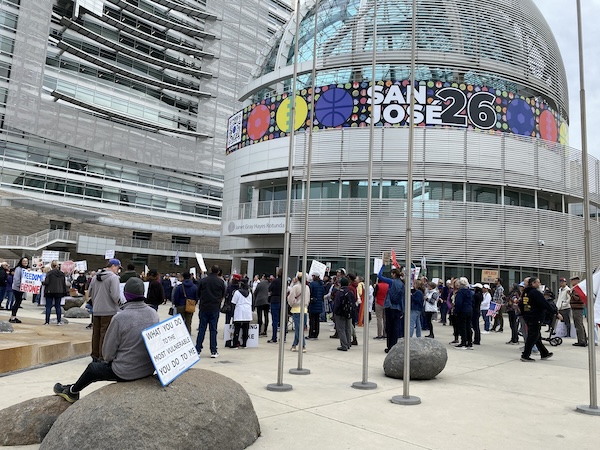
AI data centers are already being built in San Jose, and many more are planned for this year and the years ahead. While some projects have already received approvals, residents still have opportunities to influence future developments. Community members can organize, attend public meetings, submit comments, contact elected officials, and speak with one united voice. Through these actions, they can demand greater transparency, environmental protections, and accountability for projects affecting neighborhoods, drinking water supplies, public health, and quality of life. Together, the public can shape the decisions that will impact San Jose for generations to come.

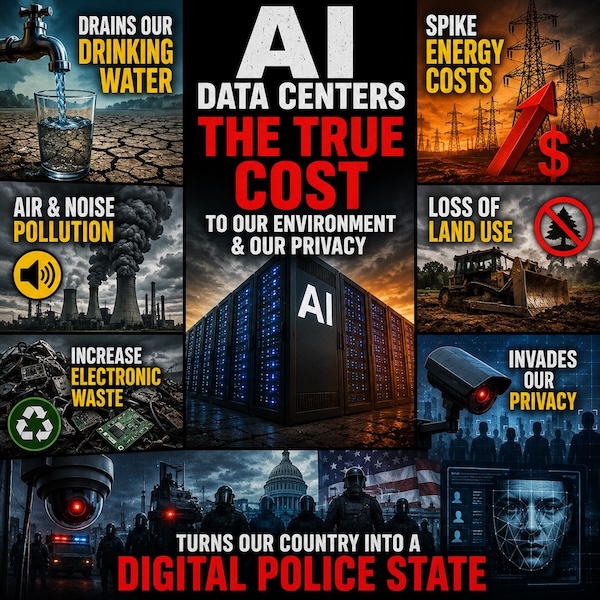
A single large AI data center consumes millions of gallons of drinking water and vast amounts of electricity daily. AI data centers drain local water supplies, increase pressure on the power grid, leading to blackouts, and require costly infrastructure upgrades. Communities are forced to bear the consequences through higher utility bills, reduced resource availability, environmental impacts, and increased taxpayer-funded public investments.

Additionally, the constant low-frequency hum from cooling systems generates high noise levels that can reach dangerous decibel levels causing stress, sleep disruption, and health issues for nearby residents even at distances up to two miles away. This cumulative environmental burden—from air pollution to water depletion to noise exposure—not only destabilizes ecosystems but also directly jeopardizes public health through worsened air quality, extreme heat, and chronic noise-related health conditions.

AI-Powered Surveillance and Tracking Systems

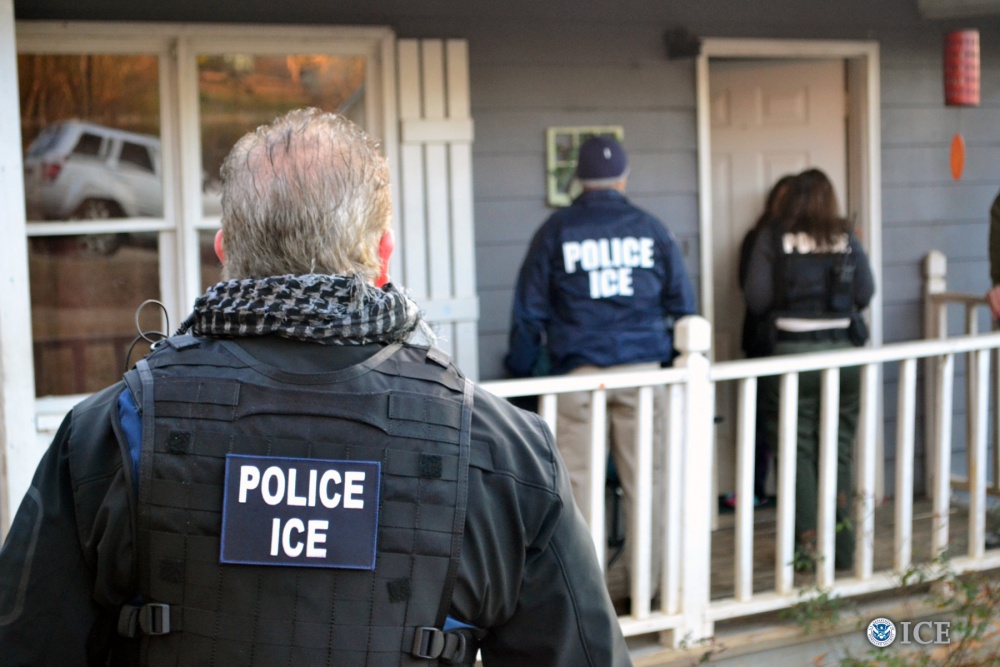
The Trump regime is continuing to use AI-powered data centers to build more surveillance systems aimed at turning the United States into a digital police state. Civil rights activists, including the ACLU, argue that facial recognition systems, commercial data purchases, predictive algorithms, and interconnected databases could be used to monitor protesters, journalists, political organizers, immigrants, and ordinary citizens. They warn that without strong legal safeguards, transparency, independent oversight, and constitutional protections, AI-powered surveillance could erode privacy, free speech, freedom of association, and democratic accountability, creating significant opportunities for abuse by both governments and private entities.

Costs & Dangers of AI Data Centers

The Hidden Costs and Dangers of AI Data Centers

Why Communities Across America Are Sounding the Alarm

Artificial intelligence is rapidly transforming modern society. Technology companies promise that AI will revolutionize medicine, education, transportation, scientific research, business productivity, and government services. Behind that promise, however, lies a massive physical infrastructure that most Americans never see: AI data centers.


These enormous facilities house thousands of computer servers that process and store vast quantities of information. They are the engines that power AI systems such as chat bots, facial recognition tools, surveillance and tracking systems, predictive algorithms, autonomous technologies, and large language models.

Supporters describe AI data centers as essential infrastructure for the future economy. Critics warn that they represent one of the most significant environmental, economic, public health, civil liberties, and democratic accountability challenges facing the United States. Their concerns are based on documented issues involving massive electricity consumption, water depletion, pollution, public subsidies, privacy risks, labor displacement, and the growing power of increasingly sophisticated artificial intelligence systems.

Civil liberties advocates, human rights organizations, and privacy experts are also sounding the alarm that the rapid expansion of AI infrastructure could enable unprecedented government and corporate surveillance. Critics fear that AI-powered monitoring systems could be used to track activists, journalists, protesters, human rights advocates, immigrants, and political opponents, contributing to what they describe as a digital police state. Some opponents further worry that the growing network of large, highly secured government and technology facilities could expand the physical and technological infrastructure available for immigration enforcement, detention operations, and population monitoring in the future, although there is currently no evidence that AI data centers are being constructed as ICE detention centers.

__________________________________________________________


A Growing Infrastructure Unlike Anything Before

The scale of AI infrastructure is unprecedented. According to the International Energy Agency, a typical hyperscale data center can consume approximately 100 megawatts of electricity, enough to power roughly 100,000 homes. Many AI-focused campuses now being planned or constructed are substantially larger.

• A 100-megawatt facility consumes approximately 2.4 million kilowatt-hours of electricity every day.

• A 500-megawatt facility consumes approximately 12 million kilowatt-hours every day.

• A 1-gigawatt facility consumes approximately 24 million kilowatt-hours every day, rivaling the electricity consumption of major metropolitan areas.

The International Energy Agency projects that global electricity demand from data centers could more than double by 2030 as AI deployment accelerates. Critics warn that no previous technology expansion has required this level of continuous energy consumption.


__________________________________________________________


Concern #1: Massive Electricity Consumption

Electricity demand has emerged as the largest concern associated with AI data centers.

Unlike many industrial facilities, AI systems operate around the clock. Servers process information continuously and require extensive cooling systems to prevent overheating.

Energy experts warn that the explosive growth of AI could create several challenges:

• Higher electricity prices

• Increased demand for power generation

• Greater dependence on natural gas plants

• Increased carbon emissions

• Strain on aging electrical infrastructure

• Reduced grid reliability

• Increased risk of power shortages during extreme weather events, creating blackouts

These concerns are not speculative.

Texas regulators recently reported that certain large data center and cryptocurrency facilities created grid reliability concerns after failing voltage-response testing requirements during grid stress events.

Opponents argue that households, hospitals, schools, and small businesses could eventually compete with AI infrastructure for access to finite electrical resources.


__________________________________________________________


Concern #2: Colossal Water Consumption

Most AI servers generate enormous amounts of heat.

Cooling systems are therefore essential for preventing equipment failure.

Many data centers use water-based cooling systems that consume large volumes of freshwater every day.

Industry estimates vary significantly depending on climate, facility size, and cooling technology. However, large AI facilities can consume millions of gallons of water daily.

Researchers project that future U.S. data center growth may require hundreds of millions to more than one billion gallons of additional water capacity every day nationwide.

This issue is particularly controversial because many facilities are being built in regions already experiencing water stress.

Critics warn that data centers increasingly compete with:

• Residential water users

• Farmers

• Local businesses

• Wildlife habitats

• Rivers and aquifers

The concern becomes especially acute during drought conditions and heat waves when water demand is highest and supplies are most limited.

Supporters point out that newer facilities are beginning to adopt closed-loop cooling systems that recycle water and dramatically reduce consumption. However, these systems are not yet industry-wide standards.


__________________________________________________________


Concern #3: Who Pays the Utility Bills?

Technology companies pay their own electricity and water bills.

The controversy centers on infrastructure costs.

Large AI facilities often require:

• New transmission lines

• Electrical substations

• Grid expansion projects

• Water treatment upgrades

• Water pipelines

• Road improvements

• Emergency service expansions

Researchers estimate that nationwide infrastructure costs associated with data center expansion could reach tens of billions of dollars.

Critics argue that portions of these costs may ultimately be borne by taxpayers and utility customers through:

• Higher electric rates

• Higher water rates

• Municipal bonds

• Public subsidies

• Tax incentives

• Increased local taxes

Consumer advocates increasingly question whether ordinary households should help finance infrastructure primarily serving some of the wealthiest corporations in the world.


__________________________________________________________


Concern #4: Lack of Transparency

One of the most common complaints from affected communities is that projects are often approved before residents fully understand their implications.

Citizens frequently report that they were not informed about:

• Projected electricity consumption

• Water requirements

• Tax incentives

• Infrastructure costs

• Environmental impacts

• Future expansion plans

• Noise impacts

In most jurisdictions, AI data centers are not approved by public vote.

Instead, approvals typically occur through planning commissions, utility boards, city councils, county supervisors, state agencies, or federal agencies.

Critics argue that by the time residents become aware of a project, key decisions have already been made.

Several states have begun considering additional regulations, environmental reviews, and temporary moratoriums because of public concerns regarding transparency and oversight.


__________________________________________________________


Concern #5: Rural Communities and Land Development

Many AI facilities are being built in rural regions because large parcels of inexpensive land are available.

A single AI campus can occupy hundreds of acres.

These developments often replace:

• Farmland

• Open space

• Natural habitat

• Rural landscapes

Supporters argue that data centers create economic development and tax revenue.

Critics counter that modern data centers typically employ relatively few permanent workers once construction is complete.

As a result, some communities question whether the economic benefits justify the land, infrastructure, and environmental impacts.

Additional concerns include:

• Habitat fragmentation

• Agricultural land loss

• Increased industrialization

• Pressure on local water supplies

• Changes to community character


__________________________________________________________


Concern #6: Public Lands and Property Rights

Another emerging concern involves the use of public lands and utility corridors to support AI infrastructure.

Federal agencies have explored ways to accelerate data center development, including projects involving federal land and energy infrastructure.

Critics argue that public lands belong to all Americans and should not be committed to private industrial development without extensive public review.

Property-rights advocates have also raised concerns regarding transmission corridors, substations, pipelines, and utility infrastructure associated with data center expansion.

Although eminent domain is generally used for public utility projects rather than private data centers themselves, related infrastructure projects can generate disputes involving nearby landowners.


__________________________________________________________


Concern #7: Environmental Impact

Environmental organizations increasingly view AI data centers as a major environmental challenge.

The primary concerns include:

• Carbon emissions

• Natural gas generation

• Air pollution

• Diesel backup generators

• Water withdrawals

• Habitat destruction

• Electronic waste

Many large facilities depend upon electricity generated from fossil fuels.

Critics fear that rising AI demand could extend the life of aging natural gas plants or encourage construction of new fossil-fuel infrastructure.

The controversy surrounding xAI's facilities in Memphis has become one of the most visible examples of these concerns.

Environmental groups and residents have questioned the cumulative impacts of power generation, air emissions, and water consumption associated with supporting large-scale AI operations.


__________________________________________________________


Concern #8: Noise, Sleep Disruption, and Health Impacts

Residents living near large data centers frequently report concerns about persistent industrial noise.

Sources include:

• Cooling fans

• Transformers

• Ventilation equipment

• Backup generators

• Construction operations

Unlike many industrial facilities, data centers operate twenty-four hours a day.

Health experts have long recognized that chronic noise exposure can contribute to:

• Sleep disruption

• Elevated stress levels

• Reduced quality of life

• Cardiovascular impacts

• Mental health concerns

For some residents, the constant mechanical hum becomes one of the most immediate quality-of-life issues.


__________________________________________________________


Concern #9: Electromagnetic Fields and Cancer Fears

Large data centers contain extensive electrical infrastructure, including transformers, substations, and high-voltage transmission systems.

Some residents have expressed concern regarding long-term exposure to electromagnetic fields.

At present, major public health organizations have not concluded that living near a data center causes cancer.

Current scientific evidence does not establish a direct causal relationship between data center proximity and cancer risk.

However, critics continue to call for independent long-term research regarding cumulative exposure to industrial-scale electrical infrastructure.

While cancer claims remain unproven, concerns regarding noise, sleep disruption, stress, and environmental quality are well documented.


__________________________________________________________


The Larger Debate

The debate over AI data centers extends far beyond technology. It involves fundamental questions about energy policy, water resources, environmental protection, economic fairness, democratic accountability, and public participation.

Supporters argue that AI infrastructure is necessary for economic growth, innovation, scientific advancement, and national competitiveness.

Critics argue that communities are being asked to accept unprecedented levels of electricity consumption, water use, land development, and environmental risk without fully understanding the long-term consequences.

Their warning is straightforward:

The decisions being made today about AI infrastructure may shape utility costs, water availability, environmental quality, land use, and community well-being for decades to come. Critics also fear that AI-powered monitoring systems could be used to track activists, journalists, protesters, human rights advocates, immigrants, and political opponents, contributing to what they describe as a digital police state. Some opponents further worry that the growing network of large, highly secured government and technology facilities could expand the physical and technological infrastructure available for immigration enforcement, detention operations, and population monitoring in the future.


As AI continues to expand, many Americans are demanding stronger oversight, greater transparency, independent environmental review, and meaningful public involvement before additional large-scale data center projects move forward.


Action Items


URGENT ACTION ITEMS


STAND UP. SPEAK OUT. SHOW UP.

STAND UP FOR DEMOCRACY.

"The only thing necessary for the triumph of evil is that good men do nothing." - Edmund Burke

We Need Civil Disobedience Across America.

Robert Reich. Jan 19, 2026.

Five Ways to Fight Trump's Fascism.

Robert Reich, and Inequality Media Civic Action. Aug 19, 2025.

Rallies & Rights

Rallies and Voter Rights

Find your next event:

https://indivisible.org/ | https://www.mobilize.us/

First They Came

First They Came

by Martin Niemöller

First they came for the Communists,

and I did not speak out—

because I was not a Communist.

Then they came for the Socialists,

and I did not speak out—

because I was not a Socialist.

Then they came for the trade unionists,

and I did not speak out—

because I was not a trade unionist.

Then they came for the Jews,

and I did not speak out—

because I was not a Jew.

Then they came for me—

and there was no one left

to speak out for me.

Martin Niemöller was born in Lippstadt, Germany, in 1892. Early in his life, he held strong anti-Communist views and expressed antisemitic beliefs. He also initially supported Adolf Hitler.

As the Nazi regime tightened control and sought to place the state above religious authority, Niemöller grew increasingly opposed to Hitler’s policies. He emerged as a prominent leader among German clergy who resisted government interference in the church.

In 1937, he was arrested by the regime and later imprisoned in the concentration camps at Sachsenhausen and Dachau. He remained there until 1945, when Allied forces secured his release.

After the war, Niemöller continued his work as a pastor in Germany. He became an influential advocate for repentance, moral accountability, and reconciliation among the German people in the aftermath of World War II.

error: Content is protected !!