
California’s Key Elections in 2026
California will hold two major statewide elections in 2026: the Primary Election on June 2, 2026, and the General Election on November 3, 2026. These elections allow voters to choose candidates for governor, statewide executive offices, Congress, and the state legislature, as well as decide on statewide and local ballot measures. Together, these elections determine who will lead California and what policies and laws will shape the state’s future.
What Voters Will Decide, Why Each Election Matters, and Important Dates
California will hold two major statewide elections in 2026. These elections determine leadership at the state and federal level and allow voters to approve or reject new laws and constitutional changes. Understanding the purpose of each election helps citizens participate in a meaningful way and understand how their vote shapes public policy.
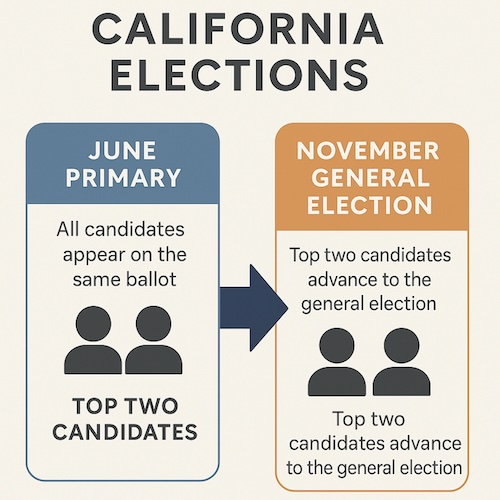
California uses a “top-two” primary system. In this system, all candidates for an office appear on the same primary ballot regardless of party. The two candidates who receive the most votes advance to the general election. (Wikipedia)
The two major statewide elections in 2026 are:
- Statewide Direct Primary Election — June 2, 2026
- Statewide General Election — November 3, 2026
Both elections involve federal, state, and local races, as well as ballot measures that allow voters to approve or reject laws.
1. California Statewide Direct Primary Election
Election Day: June 2, 2026
Voting Timeline
- Ballots mailed to voters: beginning May 4, 2026
- Ballot drop-off locations open: May 5, 2026
- Last day to register to vote in the primary election: May 18, 2026
- Final day to vote or return ballot: June 2, 2026 (Election Day) (California Secretary of State)
California automatically mails a ballot to every active registered voter. Voters may return it by mail, deposit it in a drop box, or vote in person. (California Secretary of State)
Purpose of the Primary Election
The primary election determines which candidates advance to the November general election. For most offices, the top two vote-getters move forward, even if they belong to the same political party. (Wikipedia)
This system encourages broader participation because all voters can vote for any candidate regardless of party registration.
Major Offices on the Primary Ballot
Governor of California
The governor is the chief executive of the state. The governor proposes the state budget, signs or vetoes legislation, and directs state agencies.
The 2026 election is significant because the sitting governor is term-limited, so a new governor will be elected.
Other Statewide Executive Offices
Voters will also select candidates who will advance to the general election for several statewide leadership roles, including:
- Lieutenant Governor
- Attorney General
- Secretary of State
- State Controller
- State Treasurer
- Insurance Commissioner
- Superintendent of Public Instruction
These offices oversee essential government functions such as elections administration, financial oversight, public education leadership, and consumer protection.
United States House of Representatives
All California seats in the U.S. House of Representatives will appear on the ballot. (Wikipedia)
Members of Congress represent California residents in the federal government and vote on national laws, budgets, and policies.
California State Legislature
Voters will choose candidates for:
- All 80 seats in the California State Assembly (Wikipedia)
- Half of the California State Senate seats (even-numbered districts) (Wikipedia)
State legislators write and vote on California laws, the state budget, and major policy decisions affecting education, housing, public safety, and the environment.
Local Offices and Local Ballot Measures
Depending on a voter’s location, the ballot may also include:
- County supervisors
- City council seats
- School board elections
- Local tax or bond measures
- District attorney or sheriff races
Local contests vary by county and city.
2. California Statewide General Election
Election Day: November 3, 2026
Voting Timeline (Typical Calendar)
Although exact mail dates vary slightly by county, the standard schedule follows state election law:
- Last day to register to vote in the general election: October 19, 2026
- Ballots mailed: early October 2026 (about 29 days before the election)
- Early voting and drop boxes open: early October 2026
- Election Day: November 3, 2026
- Last day to vote or return ballot: November 3, 2026
Purpose of the General Election
The general election determines who actually wins public office and will serve in government.
The candidates who finished first or second in the June primary compete in the November election.
Major Decisions Voters Will Make
Electing California’s Governor
The winner becomes the chief executive officer of the state and serves a four-year term.
The governor influences state laws, emergency policy decisions, and the management of major public programs.
Electing Members of Congress
California voters choose the individuals who will represent them in the U.S. House of Representatives.
These representatives shape federal policy on issues such as national defense, economic policy, and federal spending.
Electing the State Legislature
Voters decide who will serve in:
- California State Assembly (all seats)
- California State Senate (even-numbered districts)
These legislators write the laws that govern California and approve the state’s multi-billion-dollar annual budget.
Voting on Statewide Ballot Propositions
California has a direct democracy system that allows voters to pass laws directly through ballot initiatives and referendums. (LAVote)
Ballot propositions may include:
- Constitutional amendments
- New state laws
- Tax proposals
- Bond funding for infrastructure
- Repeal or modification of existing laws
These measures often shape major policy decisions for decades.
Some measures may originate from:
- The California Legislature
- Citizen signature petitions
- Referendums challenging recently passed laws
The final list of propositions is typically certified months before the November election.
Why These Elections Matter
California is the largest state in the United States and one of the largest economies in the world. Decisions made by California voters influence not only state policy but often national debates.
Key reasons these elections matter include:
Leadership of the State
The governor and other statewide officials oversee large agencies that manage transportation, education, healthcare, and public safety.
National Representation
California sends the largest delegation to the U.S. House of Representatives, which affects the balance of power in Congress.
Lawmaking and Budget Decisions
The state legislature passes laws and approves the state budget, which determines funding for schools, infrastructure, healthcare programs, and climate initiatives.
Direct Democracy
Ballot propositions allow voters to bypass the legislature and directly create or change state law.
Summary of Major 2026 California Election Dates
| Election | Key Voting Period | Election Day |
|---|---|---|
| Statewide Direct Primary | May 4 – June 2, 2026 (vote-by-mail period) | June 2, 2026 |
| Statewide General Election | Early October – Nov. 3, 2026 | November 3, 2026 |
Final Thought
The 2026 elections will determine the next governor of California, the makeup of the state legislature, the state’s congressional delegation, and potentially major changes in public policy through ballot propositions. Active participation in these elections ensures that citizens help shape the direction of their communities, their state, and the nation.
Disclosure and Disclaimer: This article was prepared by San Jose CAN with the assistance of artificial intelligence for research and editorial support. While the information presented is believed to be accurate, it is provided for general informational purposes only. Readers are responsible for conducting their own independent research and verification before relying on or acting on any information in this article.